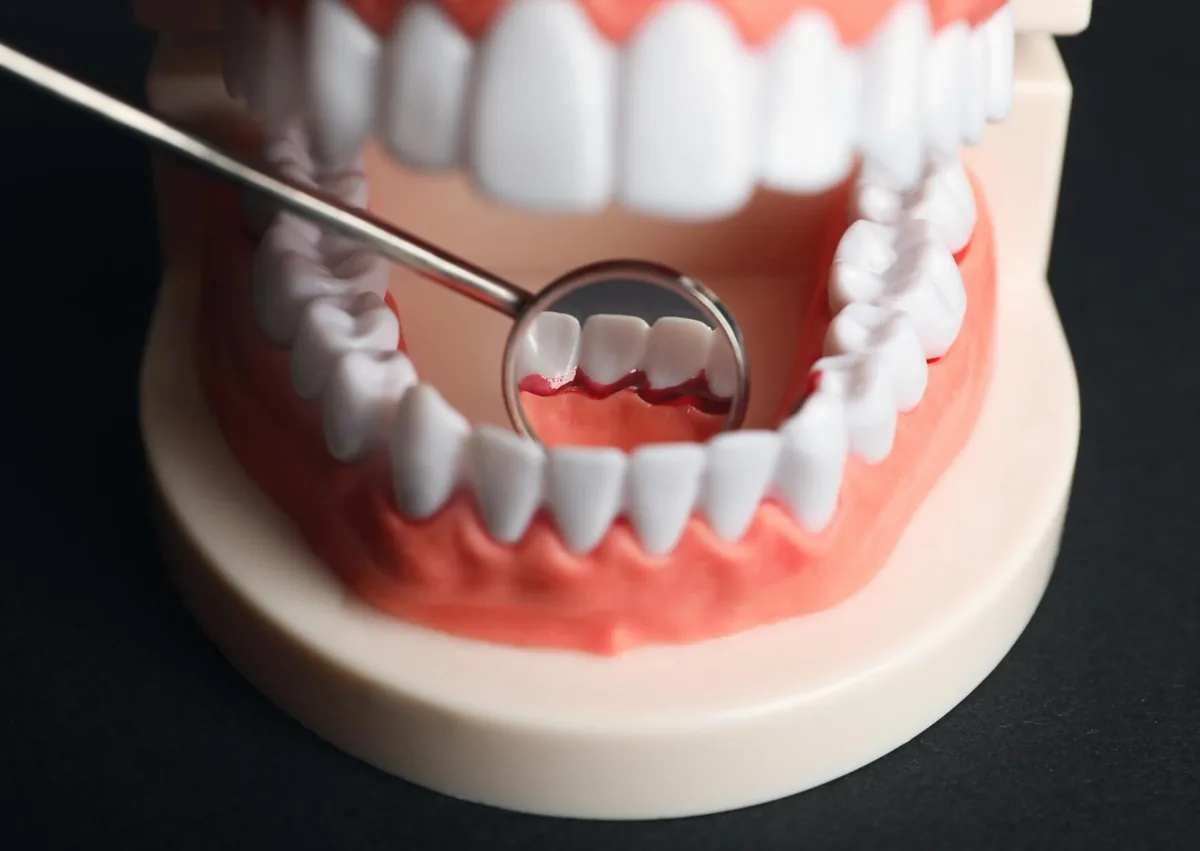
Gum recession happens when the gumline pulls away from a tooth and exposes more of the tooth or root. It usually does not grow back on its own, but early treatment can often stop it from getting worse, reduce sensitivity, and help protect the bone and tissue that support your teeth.
If your gum recession may be linked to infection or deep pocketing, early gum disease treatment can help stop tissue and bone loss and ease symptoms. Central Avenue Dental in Charlotte, NC provides conservative periodontal care to control infection, reduce pocket depth, and preserve teeth so you can focus on comfortable daily care.
Gum recession can make a tooth look longer or create a notch near the gumline. When the root is exposed, it may become sensitive to cold, heat, sweets, touch, or brushing.
You may also notice uneven gumlines, larger-looking spaces between teeth, or changes in how a partial denture fits. Gum recession can develop slowly without pain, so many people do not notice it right away.
Not every visible change near the gumline is a true recession. Tooth position, tartar buildup, and cavities near the gumline can look similar, which is why an exam matters.
Gum disease is one of the most common causes of gum recession. Inflammation from infection can damage the gums and supporting bone, and early gum disease treatment can help control infection, reduce pocket depth, and limit further tissue or bone loss.
Other factors can also contribute to gum recession, including:
Recession does not always mean poor brushing habits. In some cases, the problem is actually brushing too aggressively even when plaque control is otherwise good.
A dentist measures the gumline and checks the space between each tooth and gum, called a periodontal pocket. X-rays may also be needed to look for bone loss and to check for other problems below the surface.
The pattern of recession helps guide treatment. Recession around one tooth may point to trauma, tooth position, or thin tissue, while recession affecting many teeth may suggest brushing habits, gum disease, or broader risk factors.
Treatment depends on the cause, the amount of tissue loss, your symptoms, and whether the recession is still getting worse. The first goal is to stop or slow progression before deciding whether the exposed root needs added protection or coverage.
|
Treatment Approach |
When It May Be Considered |
What to Expect |
|---|---|---|
|
Monitoring and home-care changes |
Mild, stable recession without active disease |
Periodic measurements and gentler plaque removal |
|
Professional cleaning or periodontal therapy |
Plaque, tartar, inflammation, or gum disease |
Cleaning above and, when needed, below the gumline |
|
Desensitizing or protective treatment |
Root sensitivity or risk of root decay |
In-office or at-home products recommended by a dental professional |
|
Tooth-colored bonding |
Selected exposed roots, sensitivity, or root defects |
Material covers part of the root but does not replace gum tissue |
|
Gum grafting |
Progressive recession, limited tissue, significant exposure, or certain cosmetic concerns |
A periodontal procedure adds tissue to protect the root and improve stability |
If sensitivity is the main issue, your dentist may recommend desensitizing products or a protective restoration. If infection is present, treating the gum disease comes first.
A gum graft may use tissue from another area of the mouth or a processed grafting material. Results vary, and complete root coverage is not always possible, especially when there is substantial bone loss or recession between teeth.
If clenching, grinding, tooth position, or a piercing is contributing to the problem, that factor may need to be addressed as part of treatment. In some cases, laser periodontics may be used along with conventional care to reduce bacterial infection and support healing.
Once the recession is stable, cosmetic dentistry options such as bonding or veneers may help improve the appearance of exposed roots. These options do not treat the cause, so they are usually considered after the gums are healthy and stable.

Use a soft-bristled toothbrush and light pressure. Aim the bristles along the gumline instead of scrubbing hard back and forth.
Clean between your teeth every day with floss, interdental brushes, or another method your dentist recommends. Do not stop cleaning a sensitive area completely, because plaque buildup can make inflammation worse.
Keep regular dental visits based on your gum health and risk level. Avoid tobacco, address oral piercings that rub the gums, and mention ongoing clenching or grinding so those forces can be evaluated.
Schedule a dental visit if a tooth looks longer, the gumline seems to be changing, or sensitivity does not improve. You should also be checked if you have bleeding gums, swollen gums, bad breath that does not go away, pain when chewing, visible root damage, or a new space between a tooth and gum.
Seek prompt care for a loose permanent tooth, pus near the gums, rapidly increasing swelling, severe pain, fever with dental swelling, or swelling that affects swallowing or breathing. Trouble breathing or swallowing needs emergency medical attention.
Even a mild recession is worth tracking over time. A dentist or periodontist can explain whether the area is stable, what may be causing it, and whether treatment would help protect your teeth.
If you notice changes in your gumline or ongoing sensitivity, an evaluation can determine whether gum disease treatment or other therapies are needed to stop progression and protect your teeth. Central Avenue Dental in Charlotte, NC provides gum disease treatment and related care near Plaza Midwood and Cotswold; call (704) 900-7301 or schedule an appointment.
Gum tissue usually does not grow back to its original position on its own. Treatment can often stop further recession, and gum grafting may restore coverage in some cases.
No. Gum disease is one cause, but brushing too hard, thin tissue, tooth position, tobacco use, oral piercings, and excessive bite forces can also play a role.
Mild recession by itself does not always lead to tooth loss. However, advanced gum disease can cause recession along with loss of supporting bone, which may eventually loosen teeth if it is not treated.
A toothpaste made for sensitivity may help reduce discomfort from exposed roots. It does not correct the recession or its cause, so ongoing sensitivity should still be evaluated.
Contact us today to beautify your smile and improve your oral health.
Phone
Monday - Wednesday
7:00am to 3:00pm
Thursday
8:00am to 3:00pm
Friday - Sunday
CLOSED