Teeth bonding usually costs about $300 to $600 per tooth in the United States, though some cases cost less or more. The final price depends on how many teeth need treatment, how much reshaping or repair is needed, local office fees, and whether insurance views the bonding as restorative or cosmetic.
If you're weighing whether bonding, veneers, or whitening can improve a chip, gap, or discoloration, cosmetic dentistry can help clarify the best, most durable approach for your smile. Central Avenue Dental in Charlotte, NC evaluates options with patient-focused aesthetic planning and clear cost guidance to help you choose the right treatment.
Dental bonding, also called composite bonding, uses tooth-colored resin to improve a tooth’s shape, size, or appearance. Dentists often use it for small chips, minor gaps, discoloration, or uneven edges.
A simple repair on one tooth usually costs less than rebuilding a larger broken area or reshaping several teeth. You need an exam for an exact quote because the dentist must check the tooth, bite, and amount of resin required.
Ask whether the quoted fee includes the exam, X-rays if needed, shade matching, polishing, and any follow-up adjustments. Some offices include these items, while others bill them separately.
Several factors can change the total cost of teeth bonding:
Bonding is conservative because it usually requires little or no removal of healthy enamel. Still, the lowest-cost option is not always the best choice if the tooth needs more strength or the cosmetic change is extensive.
Insurance may help pay for bonding when it restores a tooth damaged by decay, injury, or another covered condition. Plans often do not cover bonding done only to close a gap, change shape, or improve color because those uses are usually considered cosmetic.
Coverage depends on the deductible, annual maximum, waiting periods, frequency limits, and the insurer’s allowed fee. For a broader overview of plan terms, see dental insurance basics.
Before treatment, ask the office for a written estimate and request a pre-treatment benefit estimate from your insurer. That estimate can help with planning, but it is not a guarantee of payment.
If insurance does not cover the procedure, ask about payment plans, healthcare financing, or whether an FSA or HSA may apply. Confirm eligibility and financing terms before moving forward.
Bonding is often less expensive upfront than porcelain veneers or crowns, but it may stain, chip, or wear sooner. These options are not interchangeable, so the right choice depends on the tooth’s condition and the result you want; see bonding vs. veneers for a direct comparison.
|
Option |
Common Purpose |
Relative Upfront Cost |
Key Consideration |
|---|---|---|---|
|
Composite bonding |
Small chips, gaps, discoloration, or shape changes |
Lower |
Conservative, but may stain or chip |
|
Porcelain veneer |
Larger cosmetic changes on a front surface |
Higher |
More stain-resistant, but usually requires enamel removal |
|
Crown |
Restoring or covering a significantly weakened tooth |
Higher |
Covers most of the tooth and requires more preparation |
|
Enamel contouring |
Smoothing very minor irregularities |
Lower |
Only small amounts of enamel can be safely removed |
A crown may be a better option when a tooth has a large fracture, extensive decay, or too little healthy structure for predictable bonding. See how long crowns last for durability expectations.
Porcelain veneers may offer better color stability for broader cosmetic changes, but they are usually less conservative and more expensive.
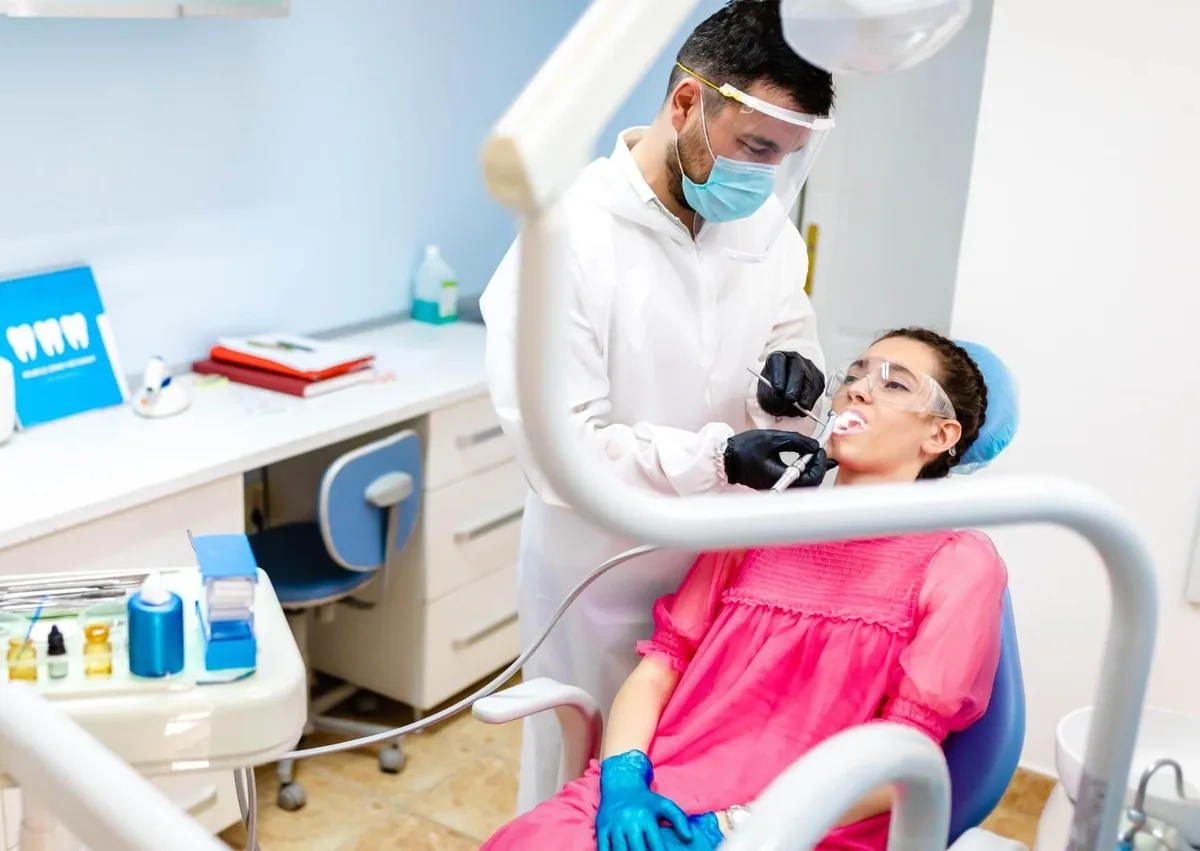
Many bonding cases can be completed in one visit. Anesthesia may not be needed unless decay is being treated or the area is sensitive.
The dentist roughens or prepares the surface, applies the resin, shapes it, hardens it with a curing light, and polishes it to blend with nearby teeth. The goal is a smooth, natural-looking repair.
Bonding can last for several years, but longevity varies based on the size and location of the repair, bite pressure, oral hygiene, and habits. Composite resin is not as strong as natural enamel or porcelain, so future polishing, repair, or replacement may be needed.
To help bonding last longer, avoid chewing ice, pens, fingernails, and other hard objects with bonded teeth. Coffee, tea, tobacco, and similar substances can stain composite resin over time.
Brush with fluoride toothpaste, clean between the teeth daily, and keep regular dental visits. If you are considering teeth whitening, ask about timing first because existing bonding will not whiten like natural enamel.
Schedule an evaluation if you have a chipped, discolored, uneven, or slightly gapped tooth and want to know whether bonding is a good option. A dentist can also tell you if decay, a crack, gum disease, enamel wear, or bite pressure should be treated first.
Seek prompt dental care if you have worsening pain, swelling, fever, drainage, a loose tooth, or a fracture that exposes a pink or red area. Facial swelling, trouble breathing or swallowing, uncontrolled bleeding, or major facial trauma needs urgent evaluation, and breathing or swallowing trouble may require emergency dentistry.
For a nonurgent cosmetic concern, ask for a written treatment plan listing the teeth involved, expected fees, alternatives, and likely maintenance. That makes it easier to compare costs and set realistic expectations.
For a clear treatment plan and an accurate estimate for bonding or other cosmetic options, schedule an evaluation to review tooth condition, photos, and insurance considerations. Central Avenue Dental focuses on cosmetic dentistry in Charlotte near Plaza Midwood and Cotswold; call (704) 900-7301 or book online to arrange an appointment.
Bonding is usually less expensive upfront than porcelain veneers and often requires little or no removal of healthy enamel. Veneers may last longer and resist stains better, but they usually cost more and require more tooth preparation; learn how long veneers last to compare longevity.
No. Bonding can work well for a small chip, but a deep crack, large fracture, heavy bite, or badly weakened tooth may need a different treatment, such as a veneer or crown.
Bonding often causes little or no discomfort because the dentist usually works on the tooth’s outer surface. Anesthesia may be needed if decay is removed, the damage is deeper, or the tooth is sensitive.
Bonding often lasts several years, but there is no fixed lifespan. Durability depends on the size and location of the repair, bite pressure, oral habits, diet, and daily dental care.
Whitening products do not significantly change the color of composite resin. A dentist may be able to polish away some surface staining, but deeper discoloration may require repair or replacement.
Contact us today to beautify your smile and improve your oral health.
Phone
Monday - Wednesday
7:00am to 3:00pm
Thursday
8:00am to 3:00pm
Friday - Sunday
CLOSED