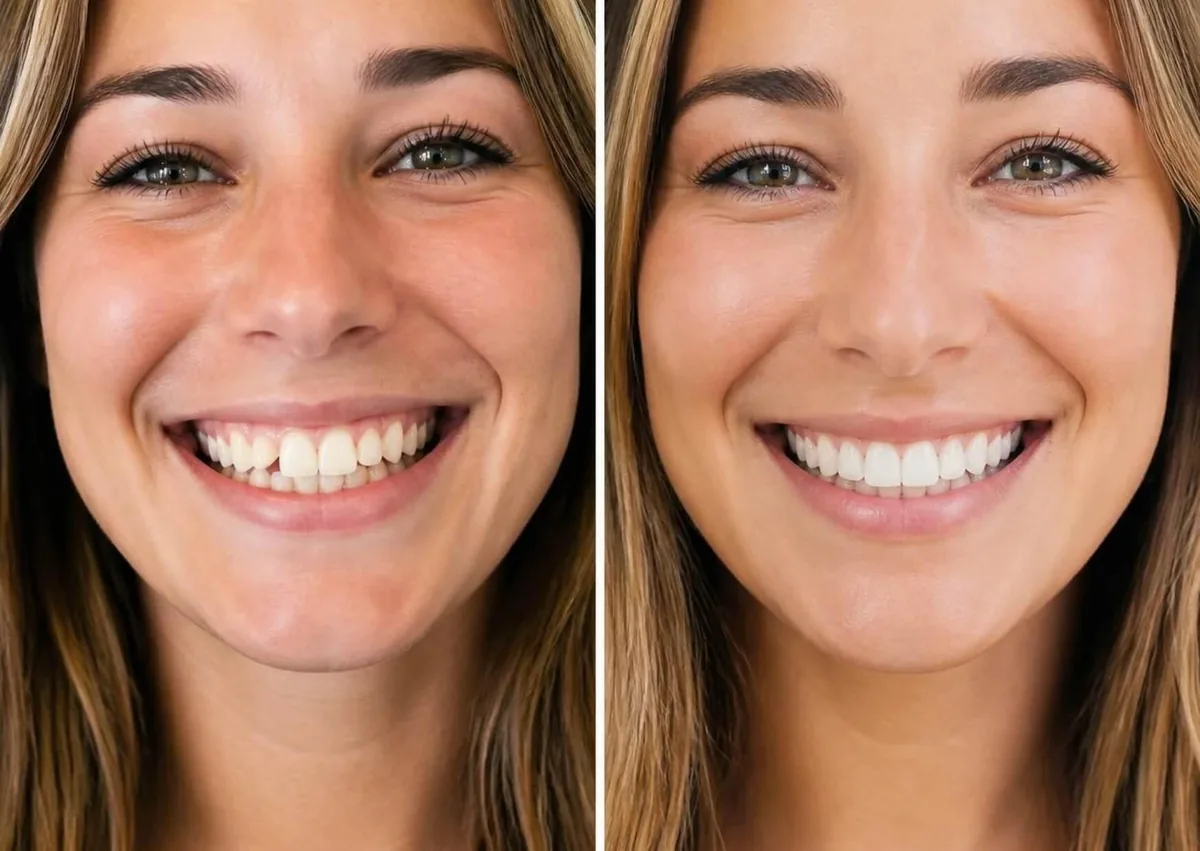
Smile makeover before-and-after results can include whiter teeth, repaired chips, more even spacing, and better tooth proportions. What is realistic depends on your oral health, the treatments chosen, and the starting condition of your teeth and gums, so photos are best used to show what may be possible rather than promise an identical outcome.
A smile makeover helps coordinate treatments to achieve a balanced, natural result tailored to your teeth and goals. Central Avenue Dental in Charlotte, NC, helps patients understand trade-offs and expected longevity so you can choose conservative options that protect natural tooth structure.
A smile makeover is a customized combination of cosmetic and restorative dental treatments. Depending on the concern, it may include teeth whitening, bonding, porcelain veneers, crowns, orthodontic treatment, gum contouring, or replacement of missing teeth.
Before-and-after photos can show changes in tooth color, shape, alignment, spacing, and visible gum levels. They do not fully show bite function, tooth sensitivity, long-term durability, or how much natural tooth structure was changed.
Lighting, camera angle, lip position, and image retouching can affect how a result looks. The most useful photos use consistent lighting and angles and feature concerns similar to your own.
People often consider a smile makeover for stains, chipped or worn teeth, small gaps, uneven edges, mild crowding, or teeth that look too small or out of proportion. Restorative treatment can also improve appearance when decay, fractures, old fillings, or missing teeth are involved.
Some cosmetic concerns have an underlying cause that should be treated first. Worn or shortened teeth may be related to grinding, acid erosion, or an unstable bite, while uneven gums may be linked to inflammation or recession.
Pain, bleeding gums, loose teeth, or significant sensitivity are not just cosmetic issues. A dental exam helps identify the cause and determine whether health-related treatment should come before appearance-focused changes.
No single treatment is right for every smile. A dentist should consider tooth structure, enamel thickness, gum health, bite forces, existing dental work, and how much change you want.
|
Treatment |
Common Use |
Typical Considerations |
|---|---|---|
|
General tooth discoloration |
Does not change the color of crowns, fillings, or restorations; temporary sensitivity may occur |
|
|
Dental bonding |
Small chips, gaps, or shape changes |
Usually conservative, but can stain or chip over time |
|
Color, shape, size, or minor alignment concerns |
Often requires some enamel alteration and is generally irreversible |
|
|
Crowns |
Heavily filled, fractured, or weakened teeth |
Covers more tooth structure than a veneer and requires ongoing maintenance |
|
Clear aligners or braces |
Crowding, spacing, or bite concerns |
Takes longer but moves teeth rather than covering their position; for clear-aligner options, see Invisalign |
|
Gum contouring |
Uneven or excessive visible gum tissue |
Suitability depends on gum health, bone levels, and tooth proportions |
In some cases, orthodontic treatment or teeth whitening can reduce the number of teeth that need porcelain veneers or crowns. Preserving healthy natural tooth structure should be part of the discussion whenever more than one option could create a similar look.
The process usually starts with an exam, dental X-rays when needed, photographs, and a discussion of your goals. Active decay, gum disease, infection, or bite problems may need treatment before elective cosmetic work begins.
For changes involving several teeth, a dentist may use digital previews, wax models, or temporary restorations to test proportions. These tools help with planning, but they do not guarantee an exact color, texture, or appearance in every type of lighting.
Recovery depends on the procedures involved. Whitening may cause short-term sensitivity, bonding often requires little recovery, and gum procedures or multiple restorations may involve more healing and adjustment time.
For practical diet ideas during recovery, see after dental work.
After treatment, your teeth should look natural at conversational distance and feel comfortable when you bite and chew. Mild awareness of a new restoration can happen at first, but persistent pain, a bite that feels high, trouble chewing, or ongoing gum irritation should be checked.
How long results last depends on the treatment, home care, diet, bite forces, and habits such as grinding, nail biting, chewing ice, or tobacco use. Whitening fades over time and may need maintenance, while bonding, veneers, and crowns can eventually need repair or replacement.
For more detail, see how long veneers last and how long crowns last.
Brush twice a day with fluoride toothpaste, clean between the teeth daily, and keep regular dental visits. A nightguard may be recommended if grinding or clenching could damage restorations, but it should be chosen after a dental evaluation.
Whitening toothpaste cannot change the shade of restorations, and highly abrasive products may scratch surfaces or worsen sensitivity. Ask your dentist how to clean and maintain the specific materials used in your makeover.
For veneered teeth, see care for veneers.
Schedule a dental evaluation if cosmetic concerns come with persistent sensitivity, tooth pain, bleeding or swollen gums, bad breath that does not improve, loose teeth, or changes in your bite. These signs may point to decay, gum disease, infection, grinding, or another condition that needs treatment.
Seek urgent dental care for severe or worsening pain, facial swelling, uncontrolled bleeding, a knocked-out tooth, or a broken tooth with significant pain. Facial swelling with fever, trouble swallowing, or difficulty breathing needs prompt emergency medical attention.
A personalized exam is the safest way to decide which changes are realistic and whether oral health needs should come first. Bring example photos and ask about alternatives, tooth preparation, maintenance, expected longevity, and the full treatment sequence.
A consultation can clarify which combination of treatments is right for your situation and outline a realistic timeline and cost estimate. Call Central Avenue Dental at (704) 900-7301 to schedule a smile makeover consultation in Charlotte, NC, near Plaza Midwood and Cotswold.
Timing can range from one or two visits for whitening or simple bonding to many months for orthodontics, implants, or combined treatment. Healing time and the number of teeth involved also affect the schedule.
No dental treatment is guaranteed to last forever. Whitening can fade, bonding can chip or stain, and veneers or crowns may eventually need replacement, although good oral hygiene and protection from heavy bite forces can help them last longer.
Comfort depends on the procedures performed. Dentists can use local anesthesia when needed, but temporary gum tenderness or tooth sensitivity may happen afterward and should be discussed before treatment.
Usually not. Tooth anatomy, facial features, gum levels, bite, and available enamel differ from person to person, so a reference photo is better used to show preferences than to set an exact expectation.
Insurance usually does not cover treatment done only for appearance. It may cover part of a medically necessary restoration, but benefits, exclusions, waiting periods, and annual limits vary by plan. See dental insurance basics for common terms and coverage questions.
Contact us today to beautify your smile and improve your oral health.
Phone
Monday - Wednesday
7:00am to 3:00pm
Thursday
8:00am to 3:00pm
Friday - Sunday
CLOSED