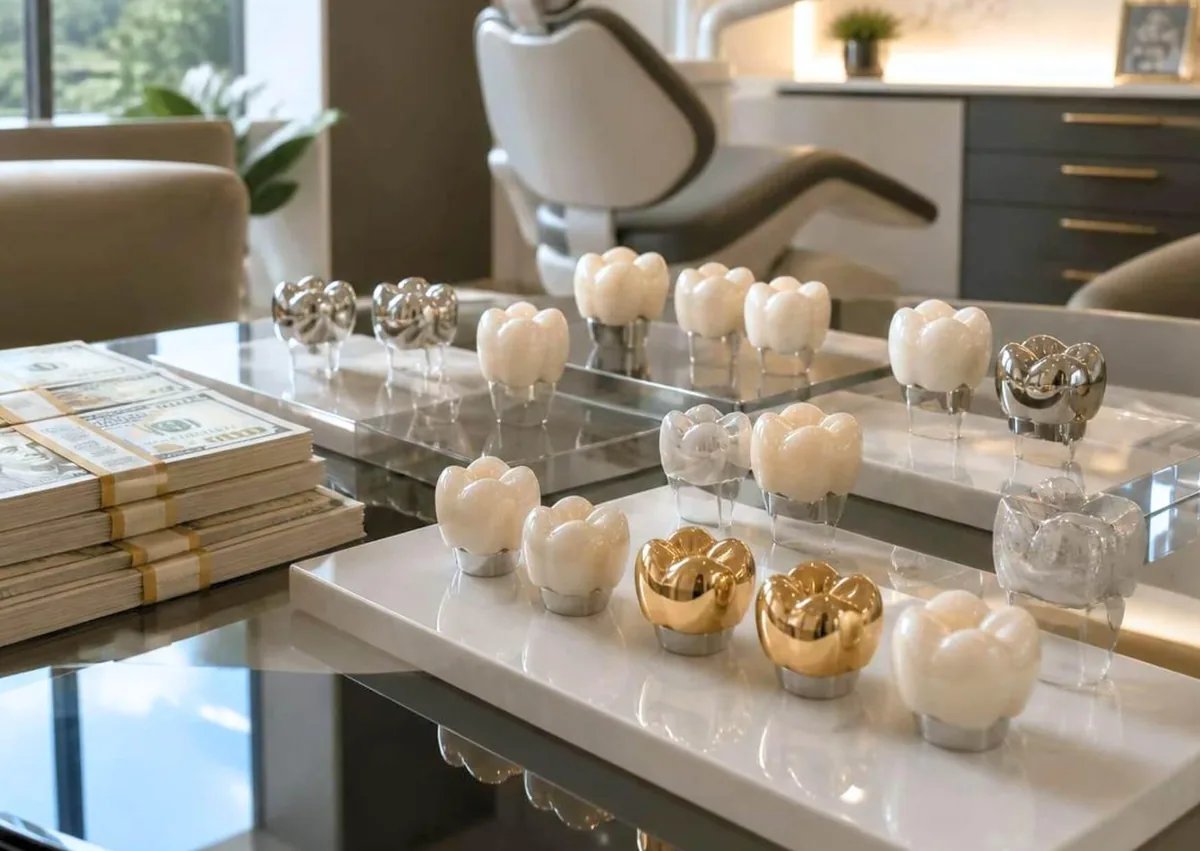
Dental crowns in the U.S. usually cost about $800 to $3,000 per tooth before insurance. The main types are porcelain-fused-to-metal, zirconia, all-ceramic, metal, and resin, and the right choice depends on appearance, strength, tooth location, and budget.
If you’re weighing crown options or need an exam to get a clear cost estimate, a general dentist can evaluate your tooth, discuss material trade-offs, and outline treatment choices. Central Avenue Dental in Charlotte, NC provides family dentistry that helps you compare crown types, understand expected fees, and plan practical next steps.
A crown is a custom-made covering that restores and protects a damaged or weakened tooth. The ranges below are broad self-pay estimates for the crown itself, not guaranteed quotes, and related care can increase the total; U.S. pricing also varies by region, as reflected in broader fee data such as the Dental Cost Index.
|
Crown Type |
Typical Self-Pay Range Per Tooth |
Common Advantages |
Important Limitations |
|---|---|---|---|
|
Porcelain-fused-to-metal |
$800 to $2,400 |
Strong, time-tested, tooth-colored exterior |
Porcelain can chip; a dark edge may show near the gumline |
|
Zirconia |
$1,000 to $3,000 |
Very strong, tooth-colored, useful for many front or back teeth |
Appearance varies by product; adjustments require care |
|
All-ceramic or porcelain |
$1,000 to $3,000 |
Highly natural appearance, no metal |
May be less suitable for some heavy-bite situations |
|
Gold or other metal alloy |
$900 to $2,500 or more |
Durable, often allows more conservative tooth preparation |
Metallic appearance; precious-metal prices can affect cost |
|
Resin or composite |
$600 to $1,500 |
Lower initial cost in some cases, tooth-colored |
Usually less wear-resistant and more prone to fracture or staining |
Temporary crowns protect the tooth while a lab makes the permanent restoration. They are usually part of the standard crown process, not a long-term substitute.
Zirconia crowns are popular because they combine strength with a tooth-colored look. They are common on back teeth and can also work in visible areas, depending on the zirconia type and the cosmetic goal.
All-ceramic crowns, including some glass ceramics, often provide the most natural translucency. They are frequently considered for front teeth, though the best choice still depends on bite forces, grinding habits, and how much healthy tooth remains; for patients focused on appearance, a cosmetic dentistry provider can help balance esthetics and durability.
Porcelain-fused-to-metal crowns have a metal base covered with porcelain. They can be reliable, but the porcelain may chip, and gum recession can sometimes reveal a darker or more opaque edge.
Metal crowns are highly durable and resist wear well. Because of their color, they are usually chosen for less visible back teeth.
The total fee reflects more than the crown material alone. It may include the exam, tooth preparation, digital scan or impression, temporary crown, lab work, placement, and follow-up adjustments, though billing varies by office.
Additional procedures can raise the final cost significantly. Common examples include X-rays, a buildup, a post, gum treatment, root canal treatment, or extraction if the tooth cannot be restored.
Location, lab fees, clinician experience, and the difficulty of matching a front tooth can also affect pricing. Same-day crowns may reduce the number of visits, but they are not always less expensive or appropriate for every case.
Ask for a written treatment estimate that lists the crown type, procedure codes, included services, possible added treatment, and expected insurance contribution. An estimate is not a guarantee because final benefits depend on your plan and on what the dentist finds during treatment.
If you want an exam and a local cost estimate from a general practice, your family dentistry office can prepare a written estimate that lists likely procedures and fees.
Many dental plans classify crowns as major restorative treatment and may pay a percentage after the deductible. Plans may also have waiting periods, annual maximums, replacement limits, missing-tooth clauses, or least-costly-alternative rules that reduce what they pay.
Coverage does not mean the crown will be fully paid for. Check whether the dentist is in network, whether preauthorization is recommended, and whether a buildup or other related procedures are billed separately.
For a broader explanation of plan details that can affect restorative treatment, see our dental insurance basics.
Dental discount plans and office payment arrangements may help reduce or spread out costs, but they are not the same as insurance. Review interest charges, fees, and repayment terms before using third-party financing.
A dentist may recommend a crown when a tooth has a large filling, significant decay, a crack, severe wear, or too little structure for a filling to hold reliably. Crowns are also commonly used after root canal treatment on teeth that handle strong chewing forces and as the visible restoration on dental implants.
Symptoms that may lead to evaluation include pain when biting, temperature sensitivity, a rough or broken area, food trapping, or a loose restoration. Some weakened teeth cause no symptoms, so an exam and dental imaging may be needed to decide whether a crown, filling, onlay, or another treatment is the better choice.
A crown cannot save every tooth. A deep crack into the root, severe bone loss, or decay that cannot be repaired predictably may require a different plan.

At the preparation visit, the dentist numbs the area, removes decay or failing material, and shapes the tooth so the crown can fit properly. If needed, a buildup is placed for support, followed by a digital scan or impression and usually a temporary crown.
A lab-made crown often requires a second visit in about two to three weeks, though timing varies. At that visit, the dentist checks the fit, bite, contacts, and appearance before bonding or cementing the crown in place.
Some offices can make selected crowns in one visit. Mild gum tenderness or temperature sensitivity can happen afterward, but you should contact the office if the bite feels off, the crown loosens, or discomfort persists or worsens.
Brush twice a day with fluoride toothpaste and clean between the crown and nearby teeth every day. If floss repeatedly catches or shreds around the crown, schedule an evaluation rather than ignoring it.
Avoid chewing ice or using your teeth to open packaging. People who clench or grind may benefit from a professionally evaluated night guard, and regular dental visits help catch decay at the crown margin, gum inflammation, wear, or loosening early; for specific post-treatment guidance on same-day restorations, see care for your crown.
Seek prompt dental care for a broken or loose crown, swelling, drainage, worsening pain, or pain that interrupts sleep. Facial swelling, fever with dental swelling, trouble swallowing or breathing, or swelling near the eye needs urgent medical or dental assessment, with emergency care for breathing or swallowing problems.
For a personalized estimate and exam to determine the best crown option for your tooth, contact a general dentist who can assess tooth structure and needed procedures. Central Avenue Dental focuses on family dentistry in Charlotte, NC and serves Plaza Midwood and Cotswold patients; call (704) 900-7301 or book online to arrange a visit.
Resin crowns may have a lower initial fee, but they are not always the best long-term choice because they can wear, stain, or fracture sooner. The least expensive appropriate option depends on the tooth, bite, expected longevity, insurance rules, and local fees.
Metal and zirconia crowns can be very durable, but no material has a guaranteed lifespan. Decay, grinding, oral hygiene, bite forces, crown fit, and the amount of remaining tooth structure often matter just as much as the material.
Local anesthetic usually controls discomfort during tooth preparation. Temporary sensitivity or gum soreness can happen afterward, but severe, persistent, or worsening pain should be checked by a dentist.
Yes. A root canal is only needed when the pulp, the soft tissue inside the tooth that contains nerves and blood vessels, is irreversibly inflamed, infected, or otherwise compromised.
Make sure each quote covers the same material and the same services, including the buildup, temporary crown, lab fees, imaging, and follow-up adjustments. Also compare insurance network status and ask whether additional treatment could become necessary after decay or old filling material is removed.
Contact us today to beautify your smile and improve your oral health.
Phone
Monday - Wednesday
7:00am to 3:00pm
Thursday
8:00am to 3:00pm
Friday - Sunday
CLOSED