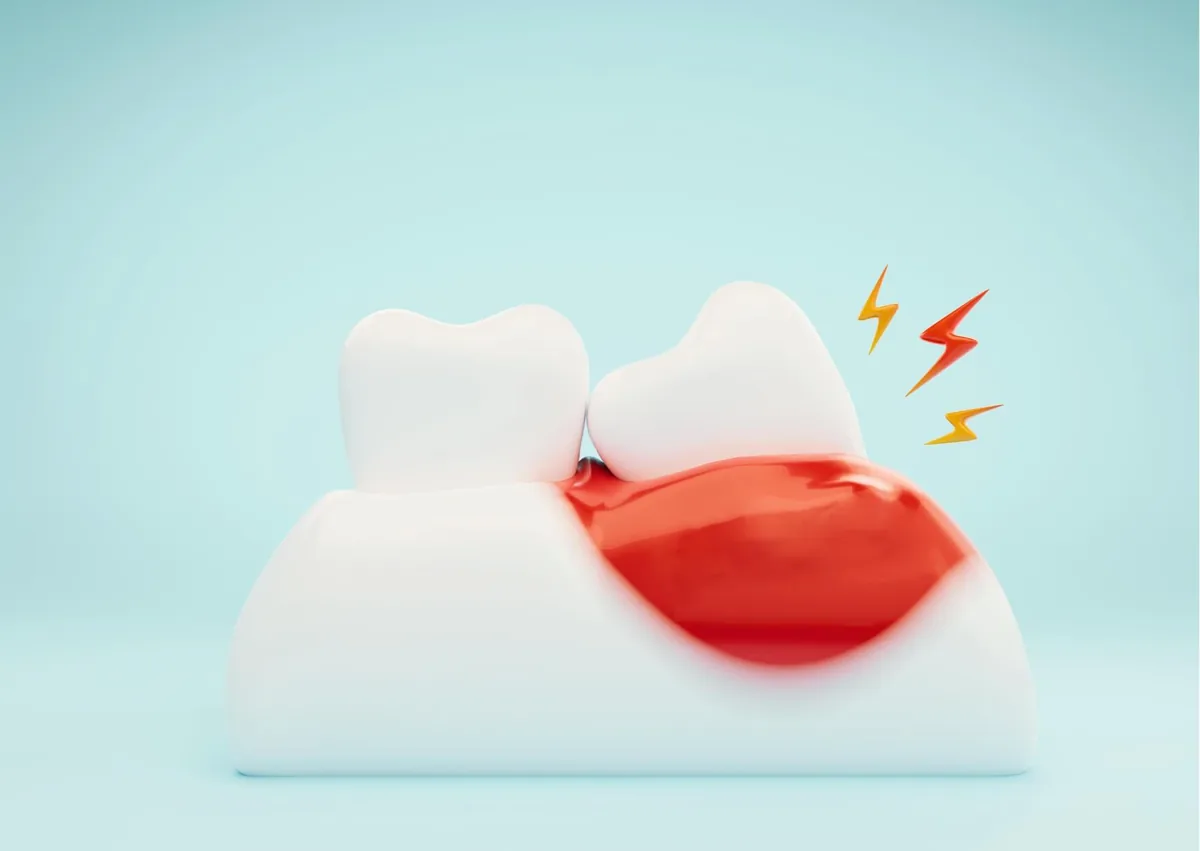
Swollen gums are often caused by plaque buildup and early gum inflammation, but they can also happen from irritation, infection, hormonal changes, or certain health conditions. Mild swelling may improve with gentle daily oral care, but swelling that lasts, keeps coming back, affects one area, or happens with severe pain, fever, or facial swelling should be checked by a dentist.
If swollen gums have been persistent or keep returning, targeted gum disease treatment can help identify and control the inflammation. Central Avenue Dental in Charlotte, NC offers focused care to reduce inflammation, protect supporting tissues, and help you avoid more extensive procedures.
Healthy gums are usually firm and fit closely around the teeth. Swollen gums may look puffy, smooth, shiny, dark red, or brighter red than usual.
They may also feel tender or bleed when you brush or floss. Swelling can affect the gumline around several teeth or show up in one specific spot.
A swollen area that forms a bump, drains, or causes a bad taste can point to an infection near a tooth or under the gum. That kind of swelling should not be ignored.
Plaque-related gingivitis is one of the most common causes. Plaque is a sticky film of bacteria that collects along the gumline. If it is not removed regularly, the gums can become irritated, swollen, and more likely to bleed.
If gingivitis is not treated, it can progress to periodontitis, a more serious form of gum disease that damages the tissues and bone supporting the teeth. Signs of more advanced disease can include gum recession, persistent bad breath, new spaces between teeth, or loose teeth.
Other possible causes include:
A new toothpaste or mouthwash can sometimes irritate gum tissue. Still, ongoing swelling should not automatically be blamed on an oral care product when gum disease, an abscess, or another dental problem may be the real cause.
Brush twice a day with a soft-bristled toothbrush and light pressure along the gumline. Clean between the teeth once a day with floss, an interdental brush, or another tool that fits your needs. For technique tips, see clean teeth.
A warm salt-water rinse may temporarily soothe irritated gums. It will not remove tartar or treat an abscess.
Do not pick at the gums, place aspirin on the tissue, or try to drain a swollen area yourself. Those steps can injure the tissue and delay proper treatment.
Drink water, avoid tobacco, and limit foods that repeatedly irritate the area. A balanced diet also supports gum health; see dental health diet.
If a denture, retainer, or other appliance is rubbing the gums, contact the dental office that provided it. Do not try to reshape it at home.
A dentist will review your symptoms, examine the teeth and gums, and may take X-rays or measure the spaces around the teeth. The goal is to find out whether the swelling is caused by plaque buildup, irritation, an infected tooth, or a deeper gum problem.
Treatment depends on the cause. It may include a professional cleaning, treatment for a damaged or infected tooth, or adjustment of an irritating appliance.
When swelling is related to periodontal disease, more focused gum disease treatment may be recommended to control infection and protect the tissues supporting the teeth. Mild gingivitis often starts improving after plaque is removed and home care becomes consistent, while deeper gum disease or a dental infection usually needs professional treatment.
The best way to lower the risk of recurring gum swelling is consistent plaque removal. Brush gently, clean between the teeth every day, and replace worn toothbrushes.
Regular dental visits also matter. Preventive care through family dentistry can help catch early inflammation before it becomes more serious.
If you notice mouth changes after starting a medication, tell your dentist or prescribing clinician. Do not stop a prescription on your own.
People with diabetes, dry mouth, a history of gum disease, or tobacco use may need closer monitoring. These factors can increase the risk of ongoing gum problems.

Schedule a dental visit if gum swelling lasts more than a few days, keeps returning, gets worse, or affects one painful area. You should also be seen for pus, a persistent bad taste, pain when biting, significant bleeding, gum recession, loose teeth, or swelling near a wisdom tooth.
Get urgent dental or medical help if you have rapidly increasing facial or jaw swelling, fever with dental pain, trouble swallowing or breathing, swelling near the eye or neck, confusion, or severe illness. These symptoms may mean an infection is spreading and should not wait for a routine visit.
If you have sudden severe swelling or trouble breathing, contact emergency dentistry or emergency services right away. Even mild but unexplained swelling is worth checking because early treatment is usually simpler and helps protect the teeth and supporting bone.
Persistent swelling, pain, or drainage can be a sign that you need professional gum disease treatment before the problem worsens. Central Avenue Dental provides gum disease treatment in Charlotte, NC and serves nearby Concord and Gastonia; call (704) 900-7301 to schedule an appointment today.
Mild irritation or early gingivitis may improve with gentle, thorough oral hygiene. Swelling that persists, returns, or comes with pain or drainage should be evaluated because infections and advanced gum disease usually do not resolve without treatment.
Swelling around one tooth can happen from trapped food, gum irritation, a cavity, a cracked tooth, gum disease, or a tooth-root infection. A dental exam is the safest way to find the cause, especially if the tooth hurts or the area produces pus or a bad taste.
Hormonal changes during pregnancy can make gums more sensitive to plaque, which can lead to swelling and bleeding. These symptoms are common, but they still deserve attention, so keep up gentle daily cleaning and mention them to your dentist.
Usually, no. Gentle daily cleaning between the teeth should continue because plaque can make inflammation worse.
If flossing causes severe pain, heavy bleeding, or cannot be done around a swollen area, contact a dentist for guidance. You can also learn more about bleeding gums.
Contact us today to beautify your smile and improve your oral health.
Phone
Monday - Wednesday
7:00am to 3:00pm
Thursday
8:00am to 3:00pm
Friday - Sunday
CLOSED