
If a child loses a baby tooth too early, the nearby teeth can start drifting into that open space. A dental spacer for kids, also called a space maintainer, helps hold that gap so the adult tooth has a better chance to come in where it should.
This is a common preventive treatment in pediatric dentistry. In the right situation, it can help reduce the risk of crowding, blocked eruption, or more complicated orthodontic problems later.
Central Avenue Dental in Charlotte, NC provides family dentistry and preventive pediatric care like space maintainers.
A dental spacer, often called a space maintainer, is a small dental appliance placed after a baby tooth is lost earlier than expected. Its purpose is to preserve room for the permanent tooth developing underneath the gums.
Baby teeth do more than help with chewing. They also help guide permanent teeth into place.
When a baby tooth is removed early because of decay, infection, or injury, the teeth next to it may tip or slide into the empty space. That shift can make it harder for the adult tooth to erupt normally.
A child may need a spacer when a baby molar or another baby tooth is lost well before its normal time. Common reasons include severe tooth decay, dental infection, trauma, or a tooth that could not be saved with a filling or crown.
Not every child who loses a baby tooth early needs a spacer. The decision depends on which tooth was lost, the child’s age, how much space is available, and how close the permanent tooth is to erupting.
Dentists usually confirm this with an exam and dental X-rays. X-rays help show the position of the developing adult tooth and whether holding the space is likely to help, which is consistent with AAPD guidelines for managing the developing dentition.
For many families, a visit with the practice’s family dentistry team is the first step in deciding whether a spacer is needed.
There are two main types of spacers used in children: fixed and removable. The right choice depends on the child’s age, the location of the missing tooth, and how reliably a removable appliance would be worn.
A fixed spacer is attached to a tooth and stays in place until the dentist removes it. A common design uses a metal band around a back tooth with a small wire extending into the open space.
Fixed spacers are often a good choice for younger children. They do not rely on the child remembering to wear them, and they are less likely to be lost.
A removable spacer looks somewhat like a retainer. It may be used in selected cases, usually when a child is older and able to follow instructions well.
Removable appliances can work well if they are worn as directed. If they are left out often, the space may begin to close.
Placing a spacer is usually quick and does not involve major treatment. The dentist may take impressions or measurements, then fit the appliance so it sits securely and does not press into the gums.
After placement, a child may notice mild pressure, a different feeling against the cheek or tongue, or short-term changes in speech. This adjustment period is usually brief.
Food may also catch around the appliance more easily at first. That does not always mean something is wrong, but it does mean home care becomes more important.
A spacer usually stays in place until the permanent tooth is ready to come in. That may be a few months or much longer, depending on the child’s stage of dental development.
The timing is based on follow-up exams, not guesswork. Dentists monitor the area over time and may use X-rays to see whether the adult tooth is moving into position.
A regular monitoring schedule helps the dentist decide when the appliance should stay in place and when it should be removed. If the spacer becomes loose, bent, or starts interfering with eruption, it should be checked promptly.
Brushing and flossing should continue twice a day, with extra attention around the appliance. Plaque can collect more easily near the spacer and may irritate the gums or increase the risk of decay around the supporting tooth.
Most children can eat normally after a short adjustment period. Sticky foods and very hard foods are more likely to loosen or damage the appliance.
Chewy candy, gum, and ice are common problems. Your dentist may also show you safer ways to clean around the spacer based on your child’s age and the type of appliance.
A spacer should not cause ongoing pain. Mild soreness at first can happen, but persistent discomfort, swelling, bleeding, or a sore spot that gets worse should prompt a call to the dental office.
Watch for a spacer that feels loose, looks bent, or has shifted position. If it comes out completely, keep it if possible and contact the dentist, because the space can begin changing sooner than many parents expect.
Reported common complications with space maintainers include loosening, gum irritation, and appliance breakage.
Call a dentist promptly if there is facial swelling, fever, trouble swallowing, or significant pain. These signs may point to infection or another problem that should not wait.
If there is severe pain or swelling, seek emergency dentistry care right away. Also seek care if the spacer seems to be digging into the gums, if a child still cannot chew comfortably after the first few days, or if the permanent tooth appears to be erupting in an unusual position.
If a child is especially anxious or has trouble staying still for impressions or placement, ask the dentist about sedation dentistry options that may help the visit feel more comfortable.
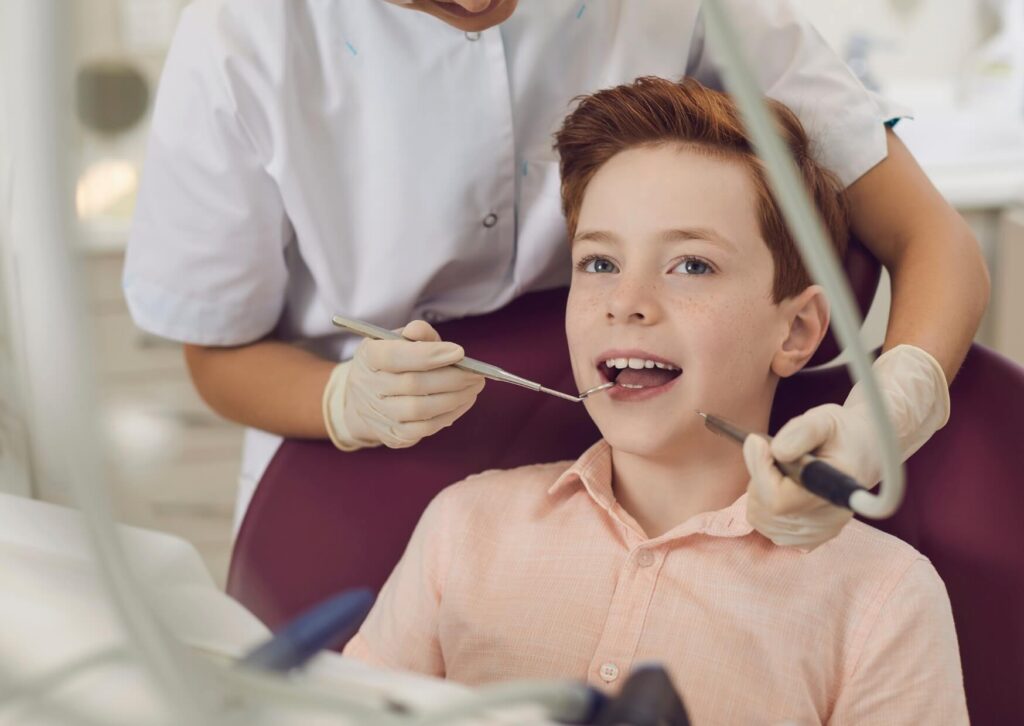
A spacer can help preserve room, but it does not guarantee that a child will never need braces. Tooth alignment also depends on jaw growth, inherited crowding patterns, eruption timing, and habits such as thumb sucking.
What a spacer can do is reduce one avoidable problem: loss of space after early baby tooth loss. That may make future treatment simpler, even if orthodontic care is still needed later.
If a child loses a baby tooth much earlier than expected, it is worth scheduling a dental evaluation rather than waiting to see what happens. The best time to assess the need for a spacer is usually soon after the tooth is lost or removed.
A dentist can check whether the space should be maintained, whether the adult tooth is close to erupting, and whether any infection or damage needs follow-up. Early review is often the simplest way to avoid a more complicated problem later.
A visit with our family dentistry team will show whether a spacer is the right preventive step.
At Central Avenue Dental in Charlotte, NC, our family dentistry team cares for children from Charlotte and nearby Concord and Matthews; call (704) 900-7301 to schedule an appointment.
No. Some children do, and some do not. The answer depends on the tooth involved, the child’s age, and how close the permanent tooth is to erupting.
Usually not. Mild pressure or irritation can happen at first, but ongoing pain is not typical and should be checked by a dentist.
Contact the dental office as soon as possible. If you can find the appliance, bring it with you because it may help the dentist assess what happened.
Usually yes, after a short adjustment period. Sticky and very hard foods are more likely to damage the appliance or pull it loose.
No. A spacer for kids is usually a space maintainer, which holds room for a future tooth. Braces move teeth into new positions.
Contact us today to beautify your smile and improve your oral health.
Phone
Monday - Wednesday
7:00am to 3:00pm
Thursday
8:00am to 3:00pm
Friday - Sunday
CLOSED