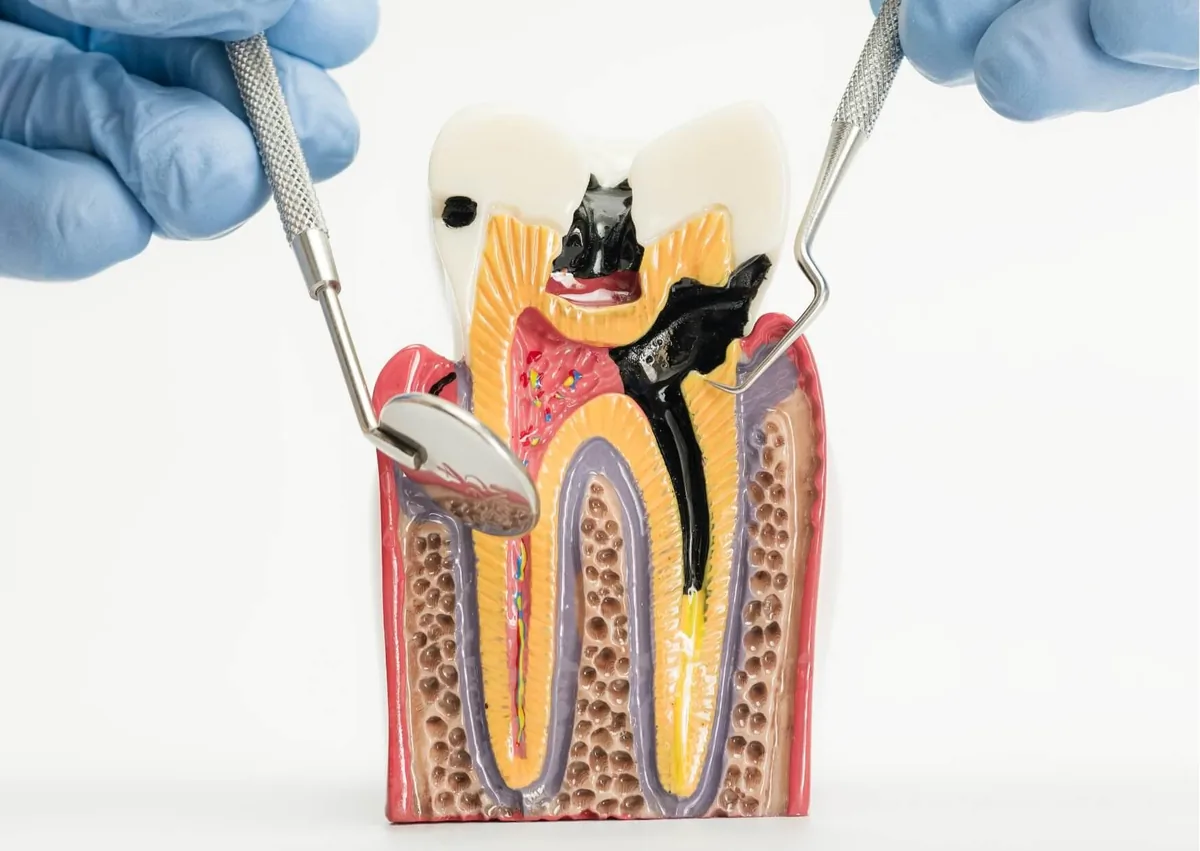
Cavities can look like white, brown, or black spots, small pits, or visible holes in a tooth. But many early cavities are hard to see at home, and stains or natural grooves can look similar, so a dentist needs to examine the tooth to confirm whether decay is present; family dentistry can help with diagnosis and treatment.
If you're noticing a spot, pit, or unexplained sensitivity and wondering whether it could be a cavity, family dentistry can help determine the cause with a gentle exam. Central Avenue Dental in Charlotte, NC provides preventive care and routine evaluations to identify concerns early and help protect your smile.
A cavity starts when acids from oral bacteria pull minerals out of enamel, the tooth's hard outer layer. Early decay may show up as a chalky white area, often near the gumline or around braces. To learn more about that process, see the science of tooth decay.
As decay progresses, the area may turn tan, brown, or black. The surface can also become rough, form a pit, or break down into a visible hole. Color alone does not show how deep the cavity is.
Some cavities cannot be seen in a mirror at all. Decay between teeth or under older fillings may only be found during an exam and, when needed, with dental X-rays.
On the chewing surfaces of molars, a cavity may look like a dark dot in a groove or a small opening. However, healthy grooves can also be naturally stained, so appearance alone is not reliable.
Between teeth, a cavity may not be visible until the enamel weakens or food starts catching there. On front teeth, decay may appear as a white, tan, brown, or dark area near the edge, between teeth, or close to the gums.
A cavity near the gumline or on an exposed root may look yellow, tan, brown, or black. Root surfaces are softer than enamel, so decay in these areas can spread faster.
Early cavities often do not hurt. As decay moves deeper, symptoms may include:
These symptoms do not always mean you have a cavity. A cracked tooth, gum recession, or a worn filling can cause similar problems. No pain does not mean no cavity, because discomfort often starts only after deeper tooth layers are involved.
Not every dark mark is decay. Stained grooves, tartar, enamel changes, worn fillings, and small cracks can all change how a tooth looks.
Do not poke or scrape a suspicious area with a sharp object. That can damage weakened enamel or irritate the gums without telling you whether the spot is actually a cavity.
A dentist usually checks the tooth's color and texture, looks for weak or damaged areas, and may take X-rays to examine surfaces that are not visible directly. Treatment depends on whether the enamel surface is still intact and how far the decay has progressed.
Very early mineral loss may sometimes be managed with professional fluoride and better plaque control. Once a true hole forms, the tooth usually cannot rebuild that missing structure on its own and often needs a filling.
If decay is deeper, treatment may involve a crown, root canals, or removal if the tooth cannot be restored. Getting the tooth checked sooner often means simpler treatment and more natural tooth structure preserved.
Brush twice a day with fluoride toothpaste and clean between your teeth daily with floss or another tool your dentist recommends. After brushing, spit out the extra toothpaste instead of rinsing right away unless your dentist tells you otherwise.
Sugary and acidic snacks or drinks give cavity-causing bacteria more chances to produce acid. Keeping them to mealtimes, drinking water between meals, and going to regular dental visits can help lower your risk.
Some people benefit from prescription fluoride, dental sealants, or closer monitoring because of dry mouth, exposed roots, braces, or a history of frequent decay. A dentist can tailor prevention to your needs; our guide to cavity prevention explains more.

Schedule a dental exam if you notice a new or worsening spot, pit, rough area, or sensitivity. It is also a good idea if food keeps catching around one tooth or floss repeatedly tears in the same place.
Seek urgent dental care if you have severe pain, swelling, fever, pus, or trouble opening your mouth. Emergency dentistry may be appropriate when a visible cavity is causing intense pain, swelling, or a broken tooth that needs prompt care. If you have trouble breathing or swallowing, seek emergency medical care right away, especially if swelling is present.
Because a cavity's appearance does not reliably show whether decay is present or how deep it is, a professional exam is the safest way to get a clear answer.
The next step is a dental evaluation so a clinician can confirm whether treatment, urgent care, or monitoring is appropriate. Central Avenue Dental's family dentistry team in Charlotte, NC, serving Concord and Gastonia, can help; call (704) 900-7301 to schedule or ask about same-day availability.
No. A cavity may be white, tan, brown, or black, and some cause very little visible color change. A black mark may also be a stain, so color alone does not confirm decay.
No. Cavities between teeth, under fillings, or in very early stages may not be visible at home. Dentists may use X-rays when an exam alone cannot show the area clearly.
Not always. A tooth can have significant decay without pain, while a smaller area may still feel sensitive. Pain does not reliably show how deep a cavity is.
An early area of mineral loss with an intact surface may sometimes be stabilized or remineralized with fluoride, plaque control, and diet changes. Once the tooth has broken down into a hole, it usually needs restorative treatment.
Contact us today to beautify your smile and improve your oral health.
Phone
Monday - Wednesday
7:00am to 3:00pm
Thursday
8:00am to 3:00pm
Friday - Sunday
CLOSED