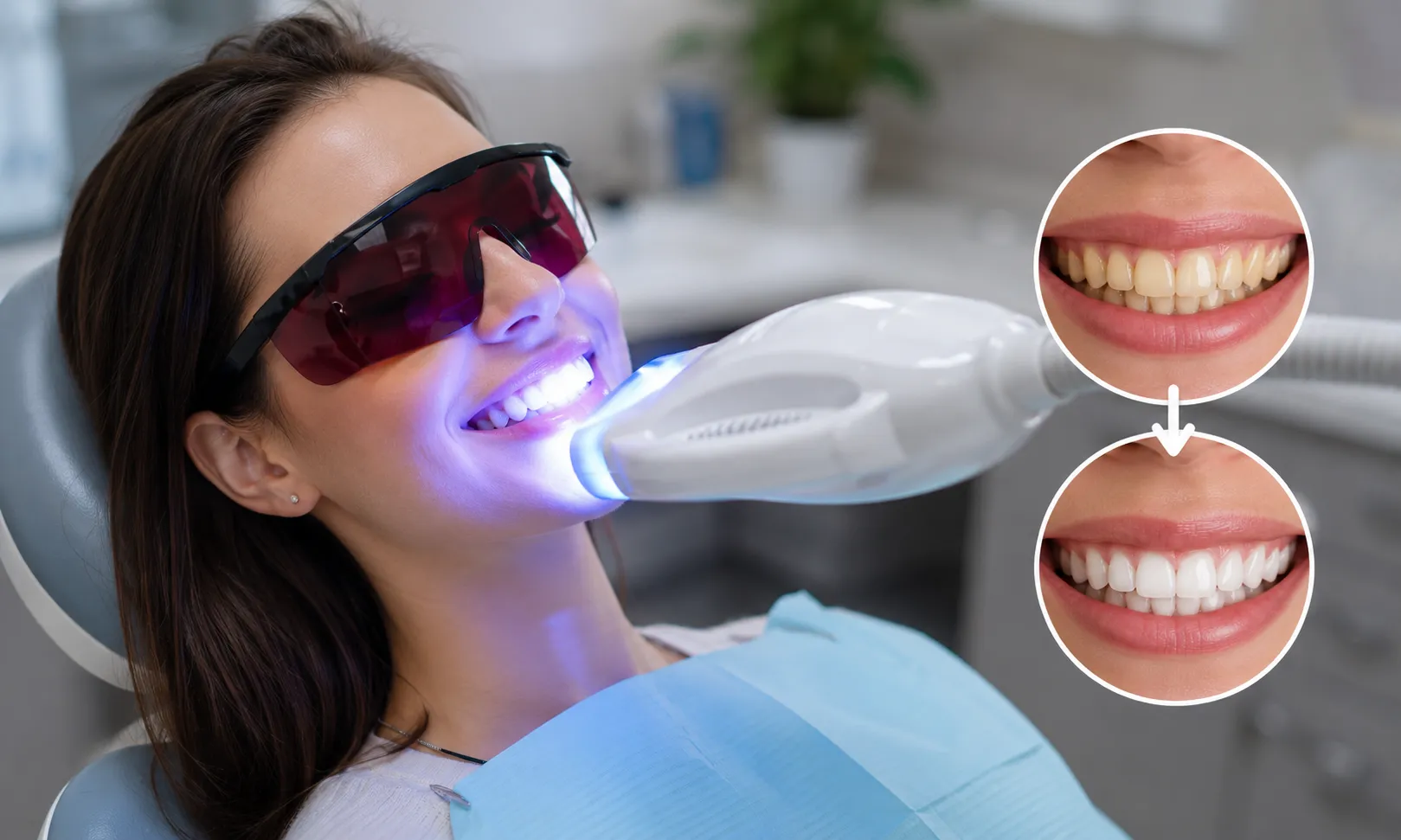
Professional teeth whitening lightens tooth discoloration using peroxide-based whitening agents designed to break apart stain particles beneath the dental surface. Cosmetic brightening procedures may help reduce yellowing caused by coffee, tea, wine, tobacco, aging, and dark-pigmented foods depending on tooth integrity and stain depth.
At Central Avenue Dental, patients often begin with a cosmetic dentistry evaluation to assess stain type, oral health, existing restorations, and smile goals before cosmetic recommendations are made.
What it is: A cosmetic dental procedure that brightens teeth using professional-grade whitening agents
Who it is for: Adults and older teens with healthy teeth and mild to moderate staining
Main benefits:
Limitations:
Timeline / durability: In-office shade enhancement often takes 60–90 minutes, while results may last several months to multiple years depending on stain exposure and maintenance habits.
Professional teeth whitening uses peroxide-based whitening agents to oxidize stain molecules trapped inside the outer tooth layer.
Tooth discoloration develops when pigments from foods, beverages, smoking, or aging settle into microscopic pores. Over time, these pigments create yellow, brown, or gray color changes beneath the dental surface.
Professional whitening systems commonly contain:
Whitening gel penetrates the outer layer and breaks apart stain compounds through oxidation, which reduces pigment concentration and creates a lighter shade.
For example, yellow staining caused by coffee or tea often responds more predictably than gray discoloration associated with certain medications or dental trauma.
The American Dental Association explains that professionally supervised whitening is generally designed to balance stain reduction with oral safety and sensitivity management.
An in-office whitening appointment usually includes an examination, shade analysis, protective isolation, and whitening gel application.
Most appointments begin with:
Untreated cavities, gum inflammation, or enamel erosion frequently require stabilization before whitening begins because peroxide exposure can worsen irritation in compromised areas.
Dentists commonly isolate gums and soft tissues before treatment to help reduce temporary irritation during gel application.
A professional stain-reduction process may include:
Some systems use LED or curing lights to accelerate oxidation, although effectiveness varies depending on oral condition and stain type.
Most appointments last approximately 60–90 minutes depending on discoloration severity and desired shade enhancement.
Patients seeking broader smile enhancement sometimes combine cosmetic whitening with treatments such as porcelain veneers when enamel wear, uneven spacing, or structural imperfections affect overall smile appearance.
Teeth whitening can cause temporary sensitivity because peroxide penetrates the outer layer and affects microscopic tubules inside the tooth structure.
Sensitivity symptoms commonly include:
Sensitivity risk increases in patients with:
Most treatment-related sensitivity improves within 24–72 hours after treatment.
Dentists often help reduce discomfort by recommending:
For example, avoiding ice-cold beverages immediately after treatment often helps reduce short-term sensitivity.
Professional whitening typically works best on external stains caused by foods, beverages, and tobacco products.
Common stain sources include:
Yellow discoloration often responds more effectively than gray or blue-toned staining because external pigments are easier to oxidize.
Some internal color changes respond less predictably, including stains caused by:
If whitening alone does not create the desired appearance, additional cosmetic pathways are sometimes considered.
For example, patients with chipped teeth, uneven coloration, or worn surfaces may explore smile makeover to create a more balanced smile appearance.
Professional whitening longevity depends on oral hygiene habits, dietary exposure, oral condition, and smoking history.
Results often fade faster in patients who regularly consume:
Color stability often lasts longer when patients:
Some patients maintain brighter teeth for several years, while others notice recurring staining within months because of ongoing pigment exposure.
For example, daily coffee consumption can gradually darken teeth again if stain accumulation continues without routine maintenance.
Preventive cleanings help remove plaque and surface buildup that contribute to recurring discoloration.
Professional whitening systems use stronger whitening agents and more customized application methods than most over-the-counter products.
| Feature | Professional Whitening | Store-Bought Products |
| Whitening Strength | Higher concentration | Lower concentration |
| Customization | Personalized | Limited |
| Treatment Monitoring | Professional supervision | Self-directed |
| Speed of Results | Faster | Slower |
| Gum Protection | Typically included | Limited |
Store-bought strips and whitening toothpaste may help reduce mild surface stains, but uneven application and excessive use can increase gum irritation or inconsistent color results.
Professional brightening procedures often provide more controlled application because dentists evaluate oral condition, sensitivity risk, and existing restorations before treatment begins.
Professional whitening is not appropriate for every patient depending on oral health condition, restoration type, and structural integrity.
Additional evaluation is commonly recommended if patients have:
Pregnant patients and younger children are also commonly advised to discuss cosmetic whitening carefully with a dental provider before treatment.
Crowns, veneers, and fillings do not change color during whitening. Existing restorations occasionally require replacement if shade differences become more noticeable afterward.
Patients with deeper structural damage or infection sometimes require procedures such as root canals or restorative care before cosmetic whitening becomes appropriate.
Results depend on oral condition, natural shade, and stain depth. Many patients experience multiple shades of brightening, although deeper internal discoloration may respond differently than surface stains.
Professional whitening is generally designed to minimize dental surface damage when performed under dental supervision. Excessive exposure can increase temporary sensitivity in some patients.
Whitening may reduce some internal discoloration, but trauma-related, medication-related, or gray-toned stains often respond less predictably than external staining.
Crowns, veneers, and fillings do not change color during whitening. Existing restorations occasionally require replacement if shade differences become more noticeable afterward.
Professional systems usually use stronger whitening agents and customized application methods, which often create more consistent results than toothpaste alone.
Many dentists recommend limiting dark-colored foods and beverages for approximately 24–48 hours because teeth temporarily absorb pigments more easily immediately after treatment.
Tooth discoloration commonly develops from stain accumulation, aging, enamel wear, smoking, and dietary exposure over time. Surface staining often responds differently than deeper internal color changes, which is why cosmetic recommendations usually depend on stain type, oral condition, and existing restorations.
If you are noticing yellowing teeth, uneven coloration, beverage stains, or darker discoloration that no longer improves with brushing alone, a cosmetic dental evaluation may help determine whether professional whitening is appropriate. If this applies to your smile goals, evaluating oral condition and visible restorations first may help improve comfort and color consistency.
Central Avenue Dental provides cosmetic-focused dental care tailored to each patient’s discoloration concerns, smile goals, and restoration needs. Patients considering professional teeth whitening can request a consultation to evaluate stain type, tooth condition, expected shade changes, and appropriate cosmetic options.
Contact us today to beautify your smile and improve your oral health.
Phone
Monday - Wednesday
7:00am to 3:00pm
Thursday
8:00am to 3:00pm
Friday - Sunday
CLOSED